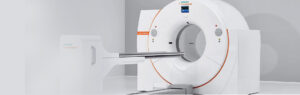
What is PET-CT?
Positron Emission Tomography–Computed Tomography (PET-CT) is an advanced medical imaging technique that combines two technologies to provide detailed insights into the body’s structure and function. By merging PET scans (which reveal metabolic activity or functional detail) with CT scans (which show anatomical/structural detail), PET-CT helps doctors detect diseases like cancer, heart conditions, and neurological disorders with exceptional accuracy.
How It Works
Before the scan, a small amount of radioactive tracer (most common being a sugar-based compound) is injected. Active cells, such as cancer cells, absorb more of this tracer, lighting up on the PET scan. The CT scan then creates precise cross-sectional images, allowing doctors to pinpoint abnormalities with greater clarity than either scan could achieve alone.
Why is PET-CT Used?
PET-CT is widely used in:
- Oncology (Cancer Care)
- Detecting tumors earlier than many other imaging methods.
- Staging cancer to determine its spread.
- Monitoring treatment (e.g., checking if chemotherapy or radiation is working).
- Determine if the cancer has returned after treatment (recurred).
- Evaluate the prognosis (outlook) of the cancer.
- Guiding biopsies to target the most active tumor areas.
- Infection and inflammation
- Early detection and localization of site of infection or inflammation
- Treatment monitoring
- Neurology (Brain Disorders)
- Diagnosing Alzheimer’s, epilepsy, and Parkinson’s disease.
- Early localization of some brain tumors and differentiating them from infections and scaring.
- Cardiology (Heart Disease)
- Determine the effects of a heart attack on areas of your heart.
- Identify areas of the heart muscle that would benefit from angioplasty or coronary artery bypass surgery
How long does a PET scan take?
The entire PET scan process takes about two hours.
It can take up to 60 minutes for your body to absorb the injected radiotracer. During this time, you’ll need to sit quietly and limit your movements. The actual PET scan takes about 30 minutes. After the test, you’ll need to wait while the technologist reviews the scans to ensure the images are clear.
What are the risks and side effects of a PET scan?
In general, PET scans are safe and rarely cause problems. The amount of radiation in the radioactive tracer is very low. It doesn’t stay in your body for long. You should drink lots of water after a PET scan to help flush the radioactive drug from your body.
PET scans generally only pose risks in the following situations:
If you’re pregnant or breastfeeding, you should not get PET scans. The radiation may be harmful to a fetus and can pass to an infant in breast milk.
Some people have an allergic reaction to PET scan radioactive tracers or CT scan contrast dyes. These allergic reactions are extremely rare and usually mild. Your medical team can give you medication to quickly slow and stop this response if it happens.
People with diabetes may not absorb the sugar in the radiotracer, which can affect scan results. Your healthcare provider will offer suggestions to modify your diet and medications before the test.
Learn more about how PET-CT can support your health journey—consult your doctor today.